Explorar las categorías
Explora
Fiverr Pro
Español
$
USD


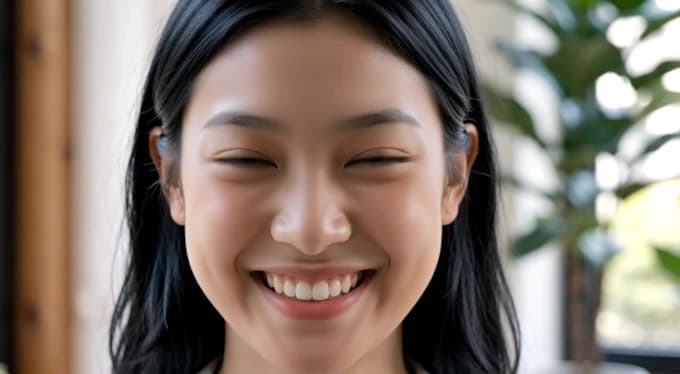
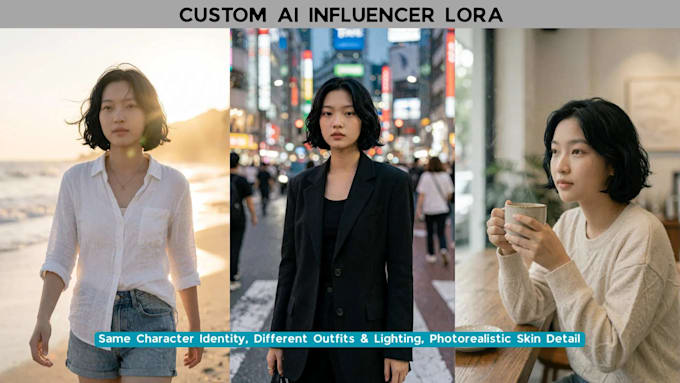
Looking to produce consistent characters, distinct visual styles, and realistic physical interactions in open-weights video AI? I train custom, production-ready Wan 2.2 video LoRAs built specifically for ComfyUI and local inference stacks.
Wan 2.2 excels at spatial-temporal coherence. Unlike basic wrappers that distort during movement, my training pipeline focuses on multi-phase interactions, natural motion pacing, and strict identity retention.
What I Offer:
Requirements & Delivery:
Send a message before ordering to review your dataset and workflow target.
Create Stunning AI Characters High Quality LoRA Models
Idiomas
What is the difference between T2V and I2V LoRA training?
Text-to-Video (T2V) trains the model to generate the subject directly from text prompts alone. Image-to-Video (I2V) trains the LoRA to anchor tightly to an input starting frame and animate realistic physical movement from that image. The Standard and Premium tiers can be dual-optimized for both.
What do I need to supply for the training dataset?
For Basic, provide 20–30 high-resolution, uncompressed stills or short video clips covering diverse angles, lighting, and expressions. For Standard and Premium, you can send raw video clips or image batches—I handle extraction, cropping, aspect bucketing, and captioning.
What hardware do I need to run this LoRA locally?
Wan 2.2 is an open-weights architecture best suited for local GPUs with 16GB–24GB VRAM (using GGUF/quantized weights or offloading in ComfyUI) or cloud instances (RunPod, Vast.ai). Every package includes a functional ComfyUI workflow JSON to run inference.
Does Wan 2.2 prevent visual distortion during complex motion?
While no diffusion video model completely eliminates artifacts during extreme motion, Wan 2.2 offers superior spatial-temporal mechanics compared to older models. My frame-cadence training ensures clean multi-stage actions like grasping objects, walking, and turning without identity collapse.
Can you train a LoRA for an artistic style or environment instead of a character?
Yes. The pipeline works for cinematic lighting styles, camera aesthetics, anime/painterly styles, and mechanical environments. Send me a message with your concept before ordering.